
Merchant services for small businesses can include card payment processing, payment terminals, online payment gateways and the systems responsible for transferring customer payments into a business bank account.
However, not every small business needs all these services.
A mobile electrician collecting payments after completing jobs has different requirements from a café serving hundreds of customers each week. Similarly, an online retailer needs a different payment arrangement from a consultant who primarily collects payments through invoices.
For most small businesses, the essential requirement is straightforward: a reliable, secure and affordable way to accept the payment methods customers actually use.
Everything beyond that should be evaluated according to the business’s operating model.
A card machine may be essential for a physical shop but unnecessary for a business operating entirely online. Advanced reporting tools can be valuable for a growing retailer but excessive for a sole trader processing a handful of transactions each month.
Understanding which merchant services are genuinely necessary helps businesses avoid unnecessary costs, complicated systems and contractual commitments that provide little practical benefit.
What are merchant services?
Merchant services are the products and financial arrangements that allow businesses to accept and process electronic payments.
Although the term is often associated with card machines, it covers several different parts of the payment process.
When a customer pays by card, the transaction involves more than the device used to collect their payment information.
The payment must be securely communicated to the appropriate financial institutions, authorised and subsequently settled into the business’s nominated account.
Merchant services provide the infrastructure that makes this possible.
What are the main components of merchant services?
The services required depend on whether payments are collected in person, online or remotely.
| Merchant service | What it does | Who might need it? |
|---|---|---|
| Card payment processing | Enables eligible debit and credit card transactions | Most businesses accepting cards |
| Merchant account or equivalent arrangement | Facilitates the receipt and settlement of card payments | Businesses accepting processed card payments |
| Card payment machine | Collects payments from customers in person | Shops, cafés, tradespeople and hospitality venues |
| Online payment gateway | Enables secure payment acceptance through websites | Ecommerce and online service businesses |
| Transaction reporting | Provides records of payments and settlements | Businesses reconciling electronic transactions |
| Technical support | Assists with payment equipment or processing problems | Businesses relying on electronic payments |
Businesses do not necessarily need separate suppliers for every component.
Some payment providers combine several services within one arrangement.
Others offer individual products that can be connected to existing business systems.
The important consideration is how the services work together and whether they meet the business’s actual payment requirements.
Does every small business need a merchant account?
Businesses accepting card payments need an appropriate arrangement for processing and settling those transactions.
However, this does not always mean opening a traditional standalone merchant account.
Historically, businesses often needed a dedicated merchant account through an acquiring bank, alongside separate payment equipment or gateway services.
Modern payment providers may offer alternative arrangements that combine merchant acquiring, processing and settlement services.
For example, some payment facilitators process transactions through a wider merchant arrangement while maintaining records for individual businesses.
Both models can enable card acceptance, but their pricing, settlement arrangements and responsibilities may differ.
Is a merchant account the same as a business bank account?
No.
A business bank account is where the company holds and manages its funds.
A merchant account or equivalent payment arrangement facilitates the acceptance and processing of card transactions.
For example, a customer might pay £80 using a debit card.
The payment processor communicates with the relevant financial institutions to obtain authorisation.
Following processing, the payment provider transfers the appropriate settlement amount into the business’s nominated bank account according to the agreed schedule.
The money does not necessarily arrive immediately after the customer completes the transaction.
The business should therefore understand how settlement works before choosing a provider.
What should a small business check?
For a start-up accepting its first card payments, the most important considerations are usually straightforward.
The business should establish how to apply, where money will be paid, what processing fees apply and how long settlement normally takes.
It should also understand what happens if a payment is refunded or disputed.
These details matter more than whether the arrangement is marketed as a traditional merchant account or a modern all-in-one payment service.
Do small businesses need a card payment machine?
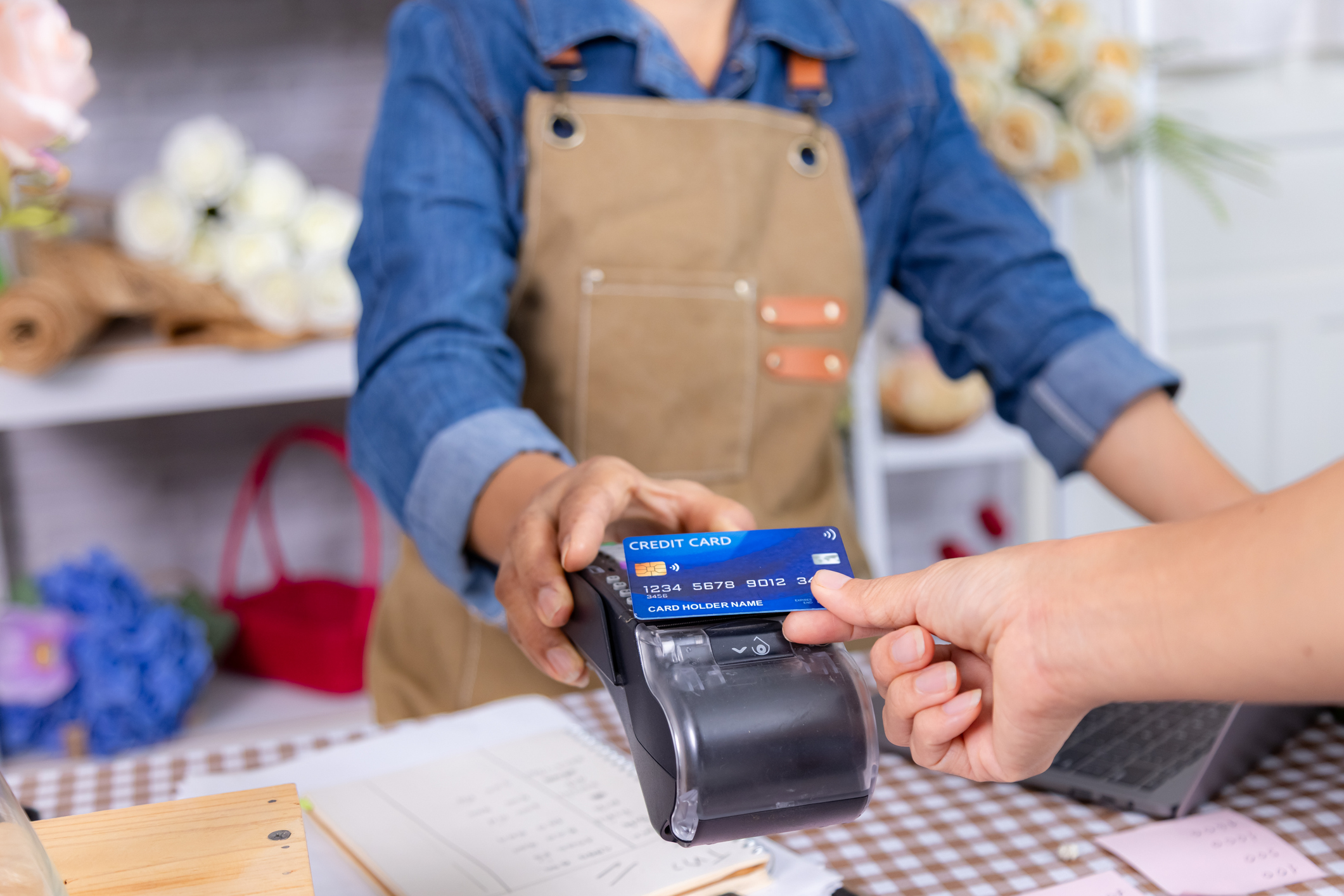
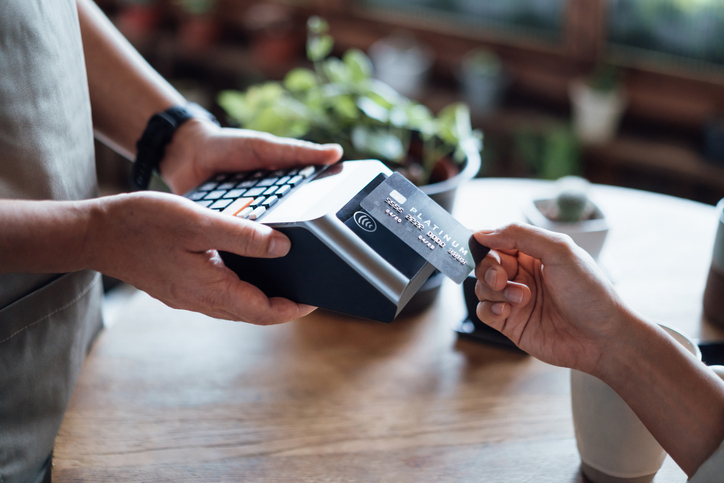
A physical card machine is useful when customers pay face to face.
For example, a small bakery may need a terminal at its checkout counter.
A mobile hairdresser might prefer a compact portable machine that can travel between appointments.
However, a business selling exclusively through an ecommerce website generally does not need a physical terminal.
The right question is therefore not whether every business needs a card machine, but whether customers are expected to make payments in person.
Which card machine features are genuinely necessary?
Many modern terminals offer touchscreen displays, cameras, barcode scanners, printers and different connectivity options.
Some of these features may be useful, but they are not equally important to every business.
Consider three examples.
A high-street florist: A terminal with reliable contactless and chip and PIN acceptance may be sufficient. If customers normally pay at a counter, advanced mobility features might offer little additional value.
A mobile plumber: Portability and mobile connectivity are likely to matter more. A terminal that relies entirely on the customer’s Wi-Fi may be unsuitable for regular home visits.
A busy restaurant: Portable payment acceptance can allow staff to collect payments at customers’ tables. Receipt printing may also be important.
The business should choose equipment based on how and where transactions occur.
For example, Gorilla Pay offers the PAX A920 Pro with a built-in printer and the compact PAX A77 MiniPoS+ for mobile payments.
Its Sunmi Pro also provides point-of-sale functionality aimed at retail and hospitality businesses.
Gorilla Pay
These illustrate why businesses benefit from comparing practical requirements rather than selecting the most feature-rich device automatically.
When does a business need an online payment gateway?
An online payment gateway is relevant when customers need to complete payments through a website, online shop or another supported digital checkout.
For example, a retailer selling products through an ecommerce website needs a way to accept payment without the customer visiting a physical checkout.
A payment gateway securely communicates transaction information between the checkout and the relevant payment services.
Depending on the provider, it may also support additional functionality such as recurring transactions or international payments.
Does every business with a website need one?
No.
A business website does not automatically require online payment processing.
For example, a local decorating company might use its website primarily to explain its services and collect enquiries.
If customers receive quotations and pay later through bank transfer, the website may not need a payment gateway.
However, if the company begins accepting booking deposits online, it may become useful to introduce an appropriate digital payment arrangement.
This distinction helps businesses avoid paying for ecommerce functionality they do not currently use.
What about businesses selling both online and in person?
Some retailers need both physical and online payment capabilities.
Imagine an independent gift shop operating a high-street premises and a WooCommerce store.
Customers visiting the shop need a way to pay at the counter.
Online customers need a suitable website checkout.
These are separate payment environments, even if the same provider supports both.
The retailer may benefit from keeping transaction records and settlement information manageable across its different sales channels.
However, businesses should confirm integration and reporting capabilities rather than assuming that using one payment company will automatically combine every system.
Gorilla Pay provides both card payment machines and online payment gateway solutions, making these service categories available to businesses with different payment requirements.
Gorilla Pay
Which merchant services suit different types of small businesses?
The most effective payment arrangement depends on the way a business operates.
Rather than purchasing an extensive service package, owners should identify the payment tasks that must be supported.

Cafés and independent shops
Generally need dependable in-person card acceptance, contactless payments and suitable receipt options. A simple terminal may be sufficient, while larger venues may need additional devices.

Tradespeople and mobile businesses
Usually benefit from portable terminals with appropriate mobile connectivity. Some may also value remote payment options, particularly when customers are not present when work is completed.

Online retailers
Need secure ecommerce payment processing and a gateway compatible with their website. A physical terminal may be unnecessary unless they also sell products in person.

Professional services
May prioritise invoice settlement and remote payment arrangements. A physical card machine is most relevant when clients regularly attend appointments and pay face to face.
The purpose of this comparison is not to prescribe one arrangement for every business within a sector.
A café offering online ordering may also need ecommerce payment processing.
A tradesperson operating a workshop with a staffed reception might prefer a countertop terminal.
The correct choice depends on actual customer behaviour and operational requirements.
What merchant service features can small businesses leave until later?
One common mistake is purchasing a payment system designed for a business significantly more complicated than the one currently operating.
A start-up may be attracted by advanced reporting, multiple terminals and software integrations.
However, these features can introduce additional costs and management requirements.
The business may not yet have enough transactions to benefit from them.
Advanced EPOS integration
An electronic point-of-sale system can provide functions such as inventory management, sales reporting and order tracking.
These capabilities can be valuable for retail and hospitality businesses.
However, a sole trader accepting occasional card payments is unlikely to need an extensive EPOS setup.
It may be more practical to introduce additional functionality when the business reaches a point where manual processes become inefficient.
Multiple payment terminals
Having several card machines can help businesses operate multiple checkout locations.
However, additional terminals are unnecessary when one device already handles the required transaction volume.
For example, a small shop serving a few customers at a time may gain little from maintaining three terminals.
A second machine becomes more useful when queues regularly form or the business introduces another staffed payment point.
Specialist payment functions
Some businesses need recurring payment functionality, multi-currency support or more complex reporting.
Others do not.
For instance, a café selling food and drink to local customers may have little reason to introduce recurring billing.
A subscription business, by contrast, may find that capability essential.
Businesses should therefore distinguish between features they might eventually use and those that address a present requirement.
How much should small businesses expect to pay for merchant services?
Merchant service costs depend on the provider, equipment and transaction arrangements.
Some businesses pay monthly membership charges alongside transaction processing fees.
Others purchase their equipment outright or enter rental agreements.
The most useful comparison is the overall cost at the business’s expected transaction volume.
Why can headline processing rates be misleading?
Consider two hypothetical providers.
| Cost | Provider A | Provider B |
|---|---|---|
| Monthly fixed charge | £10 | £25 |
| Effective transaction rate | 1.8% | 1.3% |
| Monthly card turnover | £8,000 | £8,000 |
| Total monthly cost | £154 | £129 |
These figures are illustrative and exclude any additional charges.
Provider A has the lower fixed charge, but its higher transaction rate makes it more expensive at the example sales volume.
At a much lower turnover, the outcome could be different.
This is why a small business processing £1,000 each month should not necessarily select the same arrangement as one processing £30,000.
The total cost depends on several factors, including transaction values, card categories and fixed charges.
What does Gorilla Pay charge?
Gorilla Pay currently publishes a £25 monthly membership arrangement that includes a card terminal, with a stated delivery charge of £29.99 and separately tailored processing rates.
Its pricing page also describes an Interchange Plus Plus approach and states that there are no separate authorisation fees, annual management fees, portal charges or PCI DSS compliance charges.
These are published terms rather than a quotation for an individual business.
Gorilla Pay – Simple Pricing
For a business evaluating the arrangement, the relevant calculation is the membership cost plus the actual transaction charges expected from its payment activity.
A company processing primarily consumer debit card transactions may have a different effective rate from one accepting a substantial proportion of commercial or international cards.
Businesses should therefore request a quotation based on a realistic payment profile.
Do small businesses need long payment processing contracts?
Not necessarily.
Some providers offer lengthy equipment leases, while others use shorter rolling agreements.
The best choice depends partly on how predictable the business’s future requirements are.
For example, a newly established market trader may not know how much business they will generate during the first year.
Entering a lengthy equipment agreement could create unwanted fixed costs if the business changes direction.
A more flexible arrangement may allow the trader to review payment requirements as trading develops.
Gorilla Pay publishes 30-day rolling agreements with cancellation available on seven days’ notice, subject to its terms.
Gorilla Pay
This may be useful for start-ups and seasonal businesses that want to avoid long equipment commitments.
However, flexibility should be assessed alongside the total cost.
A short contract with higher ongoing charges is not automatically better than every longer arrangement.
Businesses should understand the complete terms before deciding.
How important are payment security and technical support?
Even the simplest merchant service arrangement must protect customer payment information.
Small businesses should use appropriate payment equipment and secure processing services rather than creating their own informal methods for handling card details.
The Payment Card Industry Data Security Standard applies to organisations involved in payment processing, including small merchants.
Using a specialist payment provider can reduce the scope of certain security responsibilities, but it does not automatically remove every obligation.
PCI Security Standards Council
+1
For example, a retailer should avoid recording customers’ complete card details in spreadsheets or ordinary customer notes.
Businesses should also protect payment administration accounts and follow their provider’s security guidance.
Is technical support essential?
It becomes particularly important when electronic payments are central to trading.
Imagine a café whose only card terminal stops communicating with the payment provider during its lunchtime rush.
Staff may struggle to accept customer payments, potentially disrupting service.
A suitable support arrangement can help identify whether the problem involves the terminal, network connection or processing service.
However, small businesses should establish the actual support arrangements before committing.
Relevant questions include whether assistance is available during normal trading hours, how technical faults are reported and what happens if equipment needs replacing.
Gorilla Pay provides technical support and customer care as part of its payment services.
Gorilla Pay
For businesses without an internal technical team, access to that assistance can be an important practical consideration.
How do you know when your business needs additional merchant services?
A business does not need to introduce every available payment service at the beginning.
It can start with a suitable arrangement and review its requirements as circumstances change.
For example, a small retailer might initially operate from one premises with a single payment terminal.
Later, it may introduce a second checkout, launch an online shop or begin attending local markets.
Each development could create a reason to review its payment setup.
However, businesses should avoid treating growth itself as evidence that every system needs replacing.
The more useful approach is to identify specific operational problems.
A retailer experiencing payment queues may need additional checkout capacity.
A business receiving repeated requests to pay online might benefit from a suitable payment gateway.
A company spending excessive time reconciling transactions could investigate more useful reporting or integration capabilities.
A practical review should consider the following:
- Where customers pay: Are transactions primarily in person, online or remote?
- How frequently payments occur: Is the current equipment adequate for typical and busy periods?
- What customers expect: Are important payment methods unavailable?
- What administration is required: Are reconciliation or payment collection tasks becoming unnecessarily complicated?
- What the complete arrangement costs: Are fixed charges, processing rates and contractual terms still appropriate?
These questions provide a useful basis for deciding when additional services are justified.
Frequently Asked Questions
Can a sole trader get merchant services?
Yes. Sole traders can generally apply for payment processing services, subject to provider eligibility and verification requirements.
The most suitable arrangement depends on their business activity, expected transaction volumes and how customers pay.
Can a small business accept card payments without a physical terminal?
Yes. Businesses may be able to accept payments through an online payment gateway or another approved remote payment arrangement.
A physical terminal is primarily relevant when customers pay in person.
Is a business bank account enough to accept card payments?
A business bank account can receive bank transfers, but it does not automatically provide card processing facilities.
To accept card payments, the business needs a suitable acquiring or payment processing arrangement.
Are small businesses required to be PCI DSS compliant?
PCI DSS is relevant to businesses accepting card payments, regardless of their size.
The applicable validation requirements depend on the payment environment and relevant payment providers.
Using outsourced processing may simplify the requirements but does not automatically eliminate them.
PCI Security Standards Council
Can businesses change merchant services as they grow?
Yes, although the ease of making changes depends on the provider and existing contract.
Businesses should check whether they can add equipment, introduce online payment processing or cancel services without substantial penalties.
Shorter agreements may provide greater flexibility when requirements change.
What merchant services should a small business prioritise?
Most small businesses do not need an extensive payment infrastructure.
They need an arrangement that allows customers to pay conveniently, processes transactions securely and keeps costs proportionate to the business’s activity.
For a physical shop or café, that usually means suitable card payment equipment and processing services.
For an online retailer, a secure payment gateway is more relevant.
For a mobile business, portable equipment with appropriate connectivity may be the priority.
Additional features should be introduced when they solve a genuine operational problem, not simply because they are included in a larger package.
The most effective approach is to begin with essential payment capabilities, understand the full costs and retain enough flexibility to adapt as requirements change.
Gorilla Pay provides card payment machines and online payment gateway solutions for UK businesses, including the PAX A920 Pro, PAX A77 MiniPoS+ and Sunmi Pro.
With transparent pricing, 30-day rolling agreements and technical support, businesses can explore payment arrangements suited to their actual needs without unnecessary long-term equipment commitments.
To discuss which services are appropriate for your business, contact Gorilla Pay.
Phone: 02392 253322 Email: gorillas@gorillapay.co.uk Find out more: https://gorillapay.co.uk