
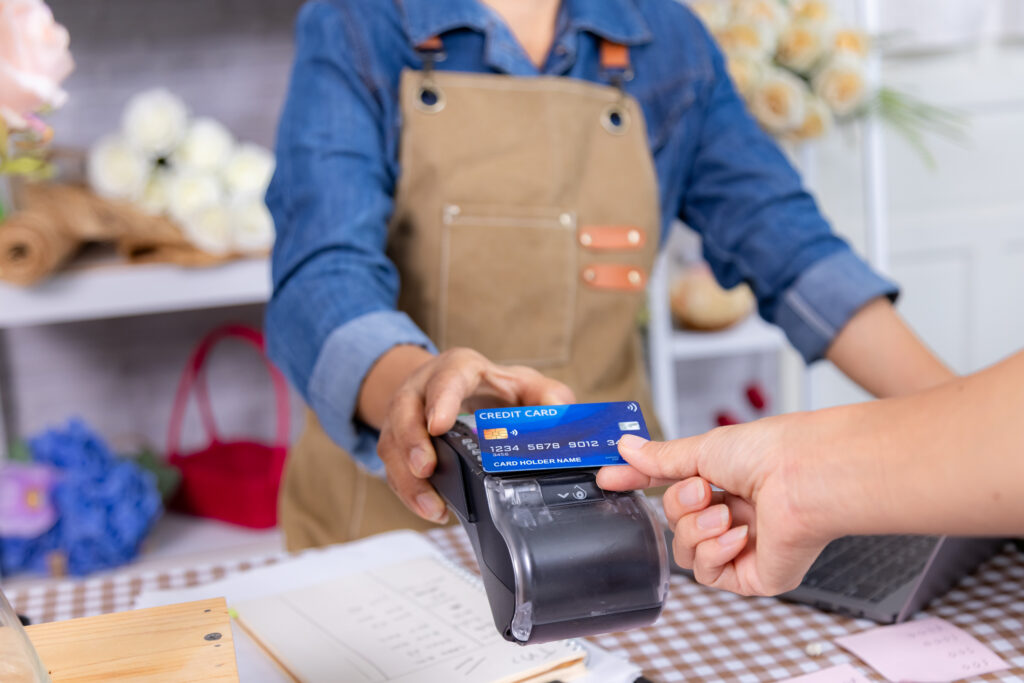
Flexible payment options for retail businesses help shops adapt to customer preferences, changing trading conditions and the practical demands of running a business. Whether operating an independent high-street shop, a seasonal retail outlet or a growing business with multiple sales channels, having suitable payment arrangements can make everyday transactions easier to manage.
For customers, flexibility usually means being able to pay using a familiar and convenient method. For retailers, however, it involves much more.
Businesses also need payment equipment that works in their trading environment, processing arrangements that suit their transaction volumes and contracts that do not create unnecessary financial commitments.
A small independent shop may require little more than reliable card and contactless acceptance. A retailer operating across several locations might need portable equipment, consistent transaction reporting and arrangements that accommodate changes in demand.
The most effective payment solution is therefore not necessarily the one offering the greatest number of features. It is the arrangement that supports the retailer’s current requirements while allowing reasonable scope for change.
Why is payment flexibility important to retail customers?
Customers approach retail purchases with different payment preferences.
Some prefer using debit cards, while others regularly pay through mobile wallets such as Apple Pay or Google Pay. Others continue to use cash, particularly for smaller everyday purchases.
A shop that supports several commonly used methods can make transactions more convenient for a wider range of customers.
This matters because payment is the final stage of the purchasing process.
A customer might spend several minutes choosing a product, comparing alternatives and deciding to buy. If they then discover that their preferred payment method is unavailable, completing the purchase becomes more difficult.
How important are card and contactless payments?
Card acceptance has become a routine expectation across much of UK retail.
According to UK Finance, debit and credit cards accounted for 64% of all payments made in the UK during 2025.
Contactless payments continued to play a substantial role, with 19.2 billion contactless transactions recorded during the year.
UK Finance
More recent card spending figures indicate that contactless payments accounted for 77% of debit card transactions and 68% of credit card transactions made in the UK during July 2026.
UK Finance
These figures demonstrate why reliable card and contactless acceptance is important for retailers.
However, they do not mean every shop should stop accepting cash.
The appropriate combination depends on customer preferences, the products being sold and the practical requirements of the business.
Why does customer choice matter?
Consider a small independent gift shop.
One customer purchases a £12 greeting card and gift using a contactless debit card. Another uses Apple Pay for a £45 purchase, while a third pays cash for a small item.
All three transactions are straightforward because the retailer supports the methods those customers wish to use.
Now imagine the same shop only accepts cash.
Customers without physical money would need to find another payment method or leave without purchasing.
The retailer might still serve some customers perfectly well, but its payment restrictions could create unnecessary obstacles for others.
Flexible payment acceptance helps reduce those obstacles.
It does not guarantee additional sales, but it can prevent payment limitations from interfering with otherwise straightforward purchases.
How can flexible payment systems support different retail environments?
Retail businesses do not all operate in the same way.
A traditional high-street shop, a temporary market stall and a retailer selling through several physical locations can have very different payment requirements.
Even within one business, those requirements may change over time.
Independent shops with fixed counters
For a small shop operating from permanent premises, a card terminal positioned near the till may be perfectly adequate.
Customers bring products to the counter, staff calculate the total and payment is completed.
In this situation, reliability and straightforward operation are likely to be more important than portability.
However, flexibility may still matter.
For example, a retailer might occasionally hold promotional events outside its normal shop layout.
A portable terminal could allow payments to be collected elsewhere within the premises without requiring customers to return to the main till.
The value depends on whether these additional payment locations are genuinely useful.
Pop-up shops and market traders
Temporary retail businesses have different priorities.
A pop-up shop might operate from a vacant high-street unit for several weeks before moving to another location.
A market trader could attend multiple events throughout the year.
In these circumstances, equipment that can operate away from a fixed counter is particularly useful.
A suitable portable terminal may connect through mobile data or Wi-Fi, depending on the model and available network.
This allows the business to accept payments without relying on permanent wired infrastructure.
However, connectivity must be considered carefully.
A mobile terminal still needs an appropriate connection to process most transactions, and mobile coverage can vary between trading locations.
Businesses should therefore check network availability before relying on a device at an unfamiliar venue.
Retailers with several sales areas
Larger retail premises may benefit from more than one payment location.
For example, a garden centre might operate a main indoor checkout alongside a separate outdoor sales area.
Requiring every customer to return to the central till could create inconvenience, particularly for bulky purchases.
Providing a suitable payment option closer to the point of sale may make the transaction easier.
However, the business must consider how payments are recorded and reconciled.
Additional terminals can improve convenience, but they also introduce equipment and administrative considerations.
The objective should be to improve the overall sales process rather than simply increase the number of devices.
Why do seasonal retailers need adaptable payment arrangements?
Retail turnover can change substantially throughout the year.
A seaside gift shop might generate much of its revenue during summer, while a business selling Christmas decorations may experience its busiest period during the final months of the year.
Other retailers encounter shorter peaks around bank holidays, local events or promotional periods.
These changes affect how much payment processing capacity a business needs.
How can fixed payment costs affect seasonal businesses?
Consider an illustrative retailer processing £18,000 in card transactions during a busy summer month but only £2,000 during a quieter winter month.
If its payment provider charges fixed monthly fees regardless of turnover, those charges represent a larger proportion of sales during quieter periods.
For example, a £50 monthly fixed charge represents approximately 0.28% of £18,000 in turnover.
Against £2,000 in turnover, the same charge represents 2.5%.
These calculations exclude transaction charges and other costs, but they illustrate why fixed fees can have a greater impact when sales fall.
The business may therefore value an arrangement that allows it to adjust its payment equipment or services without remaining committed to unnecessary costs.
Can retailers reduce their payment equipment during quiet periods?
Some payment providers offer arrangements allowing businesses to change their equipment requirements.
However, the terms vary significantly.
A retailer may be able to return an additional terminal, reduce a service package or cancel an agreement with appropriate notice.
Other providers may require the business to continue paying throughout a fixed contractual term.
Gorilla Pay offers 30-day rolling agreements and specifically identifies seasonal businesses as a group that may benefit from flexible arrangements.
Its published service information also explains that seasonal businesses can return terminals during quieter months.
Gorilla Pay
This can be particularly relevant to businesses that do not require the same payment capacity throughout the year.
However, retailers should confirm how returning equipment affects membership charges, transaction services and future reactivation.
A flexible agreement is useful only when the specific terms reflect the way the business intends to trade.
How can payment flexibility support retail business growth?
A payment arrangement that works well for a small shop may become less suitable as the business develops.
For example, an independent retailer might begin with one terminal at a single checkout.
As sales increase, the business may introduce additional staff, expand its premises or start attending local markets.
These changes can create different payment requirements.
Adding payment capacity as customer demand increases
Imagine a clothing retailer operating one checkout.
During most of the week, a single terminal is sufficient.
However, on Saturdays, customers regularly queue because several purchases need to be processed simultaneously.
The retailer might decide to introduce a second checkout position.
This could require another payment terminal, changes to its till system or an additional staff member.
An adaptable payment arrangement makes it easier to consider these changes without replacing the entire payment setup.
However, introducing another terminal will not necessarily resolve every queue.
If delays are caused by stock enquiries, complicated returns or slow till software, additional payment equipment may have limited effect.
Retailers should identify the actual cause of delays before purchasing more devices.
Expanding into additional locations
A business opening a second shop may need to review its payment infrastructure.
For example, the retailer might want consistent reporting across both premises and straightforward reconciliation of transactions.
It may also need different equipment at each location.
A compact portable terminal could suit a small boutique, while a larger store might require several checkout devices.
The business should determine whether its existing provider can accommodate these differences and whether any additional services introduce substantial costs.
Planning payment requirements before opening a new location can prevent avoidable complications during the launch.
Why do payment processing contracts affect business flexibility?
A retailer’s payment arrangements include more than the physical terminal.
The commercial agreement determines how the business pays for equipment and processing services.
Some providers use long-term equipment leases or fixed service contracts.
Others offer shorter rolling arrangements.
Neither model is automatically unsuitable, but the implications are different.
What happens when a retailer signs a long contract?
Imagine an independent shop agreeing to a four-year equipment lease.
After eighteen months, the business decides to move premises and needs a different payment setup.
The retailer may discover that its existing agreement does not allow it to cancel without additional costs.
Alternatively, the original equipment may no longer suit the layout or operational requirements of the new premises.
The business could then face ongoing payments for a system it no longer wants to use.
The exact consequences depend on the contract, but the example illustrates why flexibility should be considered before signing.
How do rolling agreements work?
Rolling contracts generally continue for shorter periods rather than locking the customer into a lengthy fixed term.
Gorilla Pay provides 30-day rolling agreements, with cancellation available on seven days’ notice under its published terms.
Its service offering also includes the Gorilla Pay Pledge, which provides a 60-day trial period with a membership refund arrangement if the customer is dissatisfied, subject to the applicable conditions.
Gorilla Pay – No Contracts
For retailers, this means changing circumstances do not necessarily require remaining in a multi-year equipment agreement.
However, businesses should still examine all contractual terms carefully.
A rolling contract does not mean every aspect of a payment service is automatically free, and transaction charges may continue to apply while the service is being used.
How can flexible payment processing help retailers manage costs?
Transaction fees can affect profitability, particularly for retailers operating on relatively narrow margins.
A payment provider’s pricing may depend on the types of cards accepted, transaction values and the commercial arrangement.
For example, consumer debit cards may be charged differently from certain commercial or international cards.
Retailers should therefore assess the types of transactions they process rather than comparing only advertised headline rates.
Why does the mix of payments matter?
Consider two illustrative shops, each processing £25,000 in card sales per month.
The first sells inexpensive everyday products, with most customers paying using UK consumer debit cards.
The second sells specialist equipment and regularly processes higher-value payments using corporate credit cards.
Although both businesses have the same monthly card turnover, their processing costs may differ.
This is because card category, transaction type and other factors can affect the underlying costs.
Gorilla Pay uses an Interchange Plus Plus pricing model, with rates tailored according to the business’s card profile and payment requirements.
Its published information also states that it does not impose separate PCI DSS charges, authorisation fees or minimum monthly service charges.
Gorilla Pay – Simple Pricing
This pricing approach gives retailers a basis for examining transaction-related costs rather than relying solely on a single advertised percentage.
However, businesses should request a full quotation and understand how each element is calculated.
What should retailers compare?
A sensible cost comparison should include equipment charges, fixed membership fees, transaction processing costs, delivery charges and cancellation arrangements.
For example, Gorilla Pay currently publishes a £25 monthly membership charge, which includes a terminal, alongside a £29.99 delivery charge and separate tailored transaction pricing.
Gorilla Pay
A retailer considering this arrangement should compare its expected overall costs against alternatives using realistic transaction volumes.
An arrangement with a lower monthly fee is not necessarily cheaper once transaction charges are included.
Likewise, a provider offering a terminal without an upfront purchase price may still charge an ongoing membership fee.
Understanding the complete cost is more useful than focusing on whether equipment is described as free.
What payment equipment suits different retail businesses?
Retailers should select equipment based on how customers pay and where transactions take place.
Gorilla Pay supplies several terminals with different features and practical applications.
PAX A920 Pro
The PAX A920 Pro is a portable smart payment terminal with a built-in receipt printer.
It may suit retail businesses that need payment flexibility while still providing printed receipts.
For example, a furniture showroom might use a portable terminal when assisting customers away from the main checkout.
The integrated printer means staff can provide a receipt without returning to a separate counter printer.
PAX A77 MiniPoS+
The PAX A77 MiniPoS+ is a compact, smartphone-style terminal designed for portable payment acceptance.
It may be useful for pop-up shops, market traders and smaller retailers that need equipment suitable for different trading locations.
Its compact design makes portability a particular advantage.
However, businesses requiring frequent printed receipts should confirm whether an appropriate external printer arrangement is needed.
Sunmi Pro
The Sunmi Pro is positioned as an all-in-one smart POS solution with integrated reporting capabilities.
This makes it relevant to retailers looking for additional point-of-sale functionality alongside payment processing.
However, businesses should confirm compatibility with their existing software, stock management processes and reporting requirements before choosing an integrated solution.
Gorilla Pay’s card payment machines provide options for different retail environments.
The most appropriate choice depends on the retailer’s transaction patterns, receipt requirements and operational needs.
Gorilla Pay
How can businesses balance payment convenience with reliability?
A flexible payment setup should also be dependable.
Introducing several payment methods or additional terminals provides little benefit if staff regularly encounter connectivity problems or transaction failures.
For example, a retailer using a portable terminal throughout a large shop should check that the device maintains a reliable connection in the areas where payments are collected.
Likewise, a business operating at outdoor events should understand how its equipment behaves when mobile coverage becomes unreliable.
Reliability also includes access to technical support.
When a terminal fails during a busy trading period, staff need to know how to establish whether payments have been processed and what steps to take next.
Gorilla Pay provides UK-based technical support for terminal setup, troubleshooting and payment-related questions.
Gorilla Pay
For retailers without dedicated technical staff, this can be an important consideration.
However, businesses should establish the provider’s actual support hours, response arrangements and escalation procedures before relying on the service.
When might additional payment flexibility be unnecessary?
Not every retailer benefits from expanding its payment options.
A small shop with a reliable terminal, straightforward payment requirements and satisfied customers may have little reason to introduce extra equipment.
Additional functionality can create costs without delivering meaningful operational benefits.
For example, an integrated POS system might offer detailed reporting and stock management features.
However, if the retailer already has effective systems for these tasks, replacing them may create unnecessary complexity.
Similarly, a business operating entirely from a fixed checkout may not require mobile connectivity.
The key is to distinguish between useful flexibility and additional features that do not address a genuine problem.
Retailers should review their current arrangements before deciding that an upgrade is necessary.
How can retailers review their payment requirements?
A practical review should begin with how the business currently accepts payments.
Rather than immediately comparing different machines or providers, retailers should identify where the existing process works and where it creates difficulties.
For example, a business might discover that its primary problem is not the number of accepted payment methods but the cost of its existing processing arrangement.
Another retailer may be satisfied with its transaction fees but need a portable terminal for occasional outdoor trading.
These businesses require different solutions.
A useful review process involves five steps:
- Understand customer preferences. Identify which payment methods customers use and whether any important options are unavailable.
- Review trading patterns. Consider seasonal changes, busy periods and whether payment requirements vary between locations.
- Assess equipment suitability. Check whether existing terminals provide the required connectivity, portability and receipt functionality.
- Calculate total costs. Examine monthly charges, transaction fees and contractual commitments using actual processing volumes.
- Plan for changes. Consider whether the current arrangement could accommodate additional terminals, new trading locations or different transaction requirements.
This approach helps businesses make payment decisions based on operational evidence rather than simply adopting newer technology.
It also reduces the risk of replacing a suitable arrangement with something more complicated and expensive.
Frequently Asked Questions
Do retail businesses need to accept every payment method?
No. Retailers should focus on payment methods that are relevant to their customers.
For many UK shops, debit cards, credit cards and contactless mobile wallets provide a useful starting point.
Additional options should be considered where there is a clear customer or business requirement.
Can retailers use portable card machines in a fixed shop?
Yes. Portable terminals can be used in permanent retail premises as well as temporary trading locations.
They may be particularly useful for larger shops, showrooms or businesses that occasionally collect payments away from the main checkout.
Are rolling payment contracts better for seasonal shops?
They can be useful where trading volumes vary throughout the year.
Shorter agreements may allow businesses to adjust their payment arrangements without being committed to lengthy equipment leases.
However, retailers should check membership charges, cancellation conditions and the terms governing returned equipment.
Can small retailers use the same payment solutions as larger businesses?
Small retailers can access many of the same card payment technologies used by larger businesses.
The difference is usually in the number of terminals, integration requirements, processing volumes and commercial arrangements.
A small shop may not need the additional complexity associated with a larger retail operation.
Should retailers replace their payment machines when sales increase?
Not automatically.
Higher sales volumes do not necessarily mean existing payment equipment is unsuitable.
A replacement may be worth considering if the current setup causes delays, lacks necessary functionality or cannot accommodate additional checkout requirements.
Businesses should identify the problem before investing in new equipment.
Why is payment flexibility a worthwhile priority for retailers?
Flexible payment arrangements help retail businesses respond to the needs of customers while maintaining control over their own operations.
For some retailers, flexibility means accepting contactless and mobile wallet payments alongside conventional card transactions.
For others, it means using portable terminals, adding checkout capacity during busy periods or avoiding long equipment contracts during seasonal fluctuations.
The most appropriate arrangement depends on how the business trades and what it expects to need in the future.
Retailers should focus on payment solutions that address genuine operational requirements, provide transparent costs and allow reasonable changes as the business develops.
Gorilla Pay supplies card payment machines and payment processing services for UK retailers, including the PAX A920 Pro, PAX A77 MiniPoS+ and Sunmi Pro.
With flexible 30-day rolling agreements, transparent pricing and UK-based support, businesses can explore payment arrangements suited to their trading patterns without unnecessary long-term equipment commitments.
To discuss suitable payment solutions for your retail business, contact Gorilla Pay.
Phone: 02392 253322 Email: gorillas@gorillapay.co.uk Find out more: https://gorillapay.co.uk