
Table service payment solutions help restaurants, cafés, pubs and other hospitality venues collect payments more conveniently without requiring customers to leave their seats or staff to return repeatedly to a central payment counter.
For businesses operating table service, the final stage of a customer’s visit can be surprisingly time-consuming. Customers request the bill, staff prepare it, a card machine is brought to the table and payment is completed.
When several tables want to settle their bills simultaneously, this process can create unnecessary delays.
Modern payment systems can simplify these interactions by allowing staff to take payments directly at the table, support different payment methods and, where compatible systems are used, connect transactions with restaurant management software.
However, the benefits depend on how the technology fits into the venue’s existing service arrangements.
A small independent café may only need a straightforward portable terminal, while a busy restaurant handling numerous tables and split bills may benefit from a more integrated payment setup.
Understanding these differences helps hospitality businesses choose payment technology that genuinely supports their service rather than adding unnecessary complexity.
How do tableside payments work?
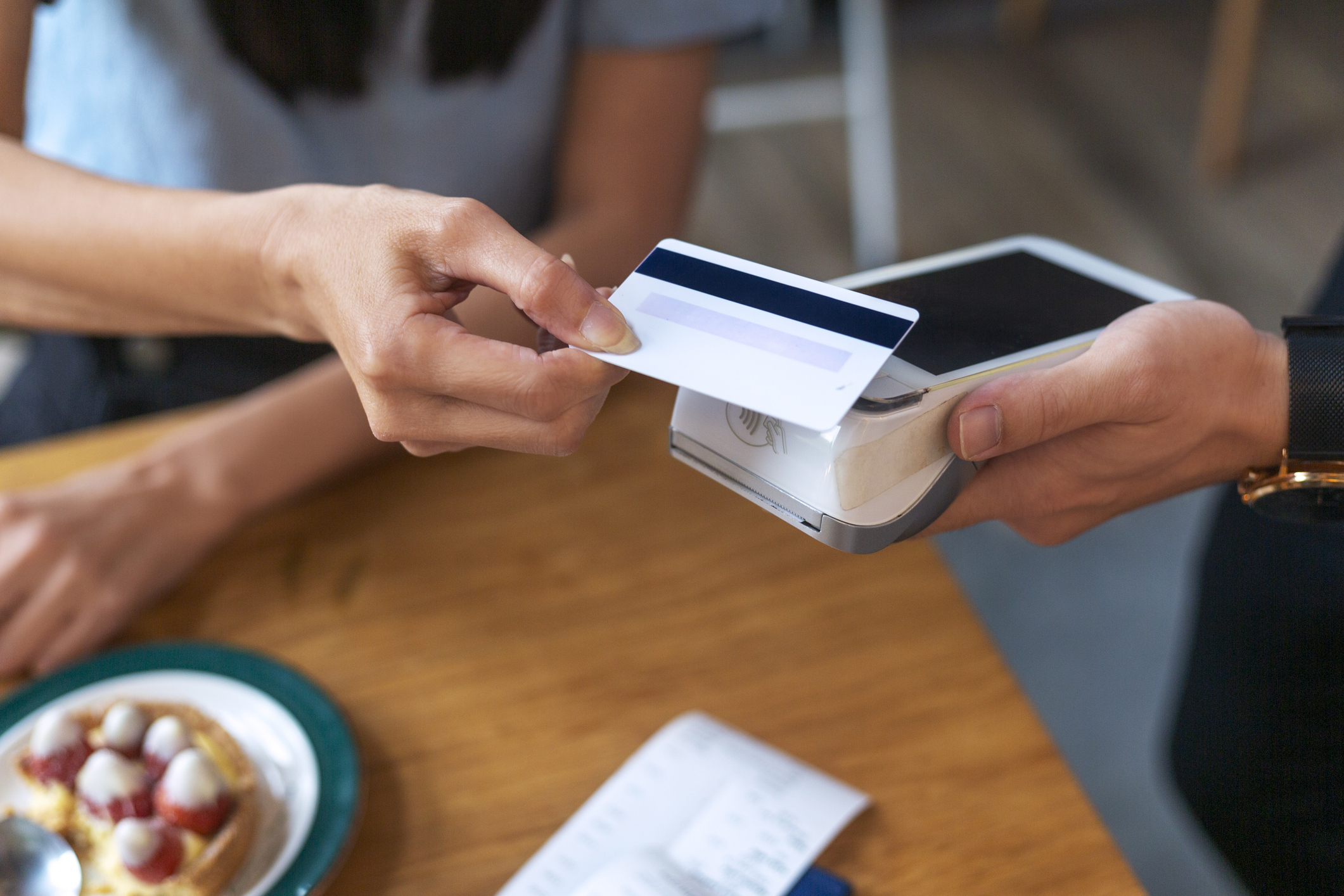
Tableside payments allow customers to settle their bills using a portable payment terminal brought directly to their table.
Instead of asking customers to visit a counter, a member of staff presents the bill and takes payment where the customer is seated.
The process usually involves entering or selecting the amount payable, presenting the terminal to the customer and allowing them to authorise the transaction.
Customers can typically pay using supported debit cards, credit cards or contactless mobile wallets.
Once the transaction has been approved, the payment is confirmed and a receipt can be provided where required.
How does this differ from traditional restaurant payments?
Consider a restaurant where card payments are processed using a single terminal behind the bar.
When a customer finishes their meal, a waiter brings the bill to the table.
The customer provides their card, and the waiter returns to the bar to process the payment.
This creates several unnecessary movements between the table and payment counter.
It may also create security concerns if staff handle customers’ cards away from their sight.
A portable terminal changes the process.
The waiter brings the machine directly to the customer, who retains control of their card and completes the transaction at the table.
The waiter can then move on to another task without making additional journeys to a central payment location.
For a quiet restaurant, the difference may seem relatively minor.
During a busy Friday evening service, however, reducing repeated movements between tables and counters can make the payment process more manageable.
Can tableside payments improve restaurant efficiency?
One of the main advantages of tableside payment technology is that it can reduce unnecessary steps during service.
Hospitality staff often work across several responsibilities simultaneously.
They may be greeting customers, taking orders, delivering food, clearing tables and answering questions about the menu.
Payment collection is another task that must fit into this workflow.
When the process involves repeated journeys to a payment counter, staff spend time moving between locations rather than attending to customers.
Portable payment terminals can help reduce this movement.
However, the improvement depends on the layout and working practices of the venue.
How much staff time could tableside payments save?
Consider an illustrative restaurant serving 60 tables during an evening.
Suppose the existing payment process involves an additional two minutes of staff time per table because employees need to return to a central terminal.
Across 60 tables, that represents 120 minutes of accumulated staff time.
If tableside payments removed half of that additional activity, the restaurant would recover approximately 60 minutes of staff capacity across the shift.
These figures are hypothetical, and the actual savings would depend on staffing arrangements, venue layout and customer behaviour.
They nevertheless demonstrate why seemingly small improvements can become meaningful when repeated throughout a busy service.
The benefit is not necessarily that the restaurant can operate with fewer employees.
Instead, staff may have more time to respond to customer requests, clear tables or prepare for incoming bookings.
How do payment solutions improve the customer experience?
Payment is one of the final interactions customers have with a hospitality business.
Even when the food and service have been excellent, delays when settling the bill can leave customers frustrated.
Consider a family finishing a meal before attending a theatre performance.
They may be perfectly happy with their experience but need to leave promptly.
If several other tables are requesting payment simultaneously, waiting for an available card machine can become inconvenient.
A suitable payment arrangement allows staff to respond more efficiently.
Customers can pay without leaving their table
Convenience is particularly valuable in restaurants where customers expect a complete table service experience.
Having to visit the bar or reception desk simply to pay can feel inconsistent with the rest of the service.
Tableside payments allow customers to complete the transaction in the same location where they have eaten.
This can be especially useful for customers with limited mobility or families managing young children.
Contactless payments can simplify the final transaction
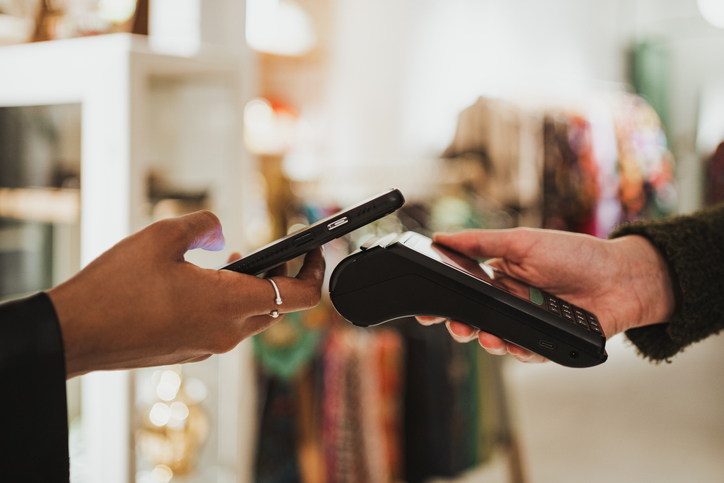
Modern portable terminals generally support contactless card payments and compatible mobile wallets.
For eligible transactions, customers may be able to complete payment by presenting their card, phone or smartwatch to the reader.
Higher-value or otherwise selected transactions may require additional authentication, depending on the payment method and card issuer.
The benefit is convenience rather than a guarantee that every payment will complete instantly.
Businesses should ensure their equipment supports the methods customers regularly use.
Digital receipts provide another option
Some customers prefer not to receive printed receipts, particularly for everyday café or restaurant purchases.
Payment terminals supporting digital receipts may allow customers to receive confirmation electronically.
However, some businesses still benefit from printed receipts.
For example, customers entertaining clients may require a physical VAT receipt or itemised record for business expenses.
The appropriate choice therefore depends on the venue and its customers.
How do table service businesses manage split bills?
Splitting bills is a common requirement in restaurants and pubs.
Groups may wish to divide the total equally, pay for individual items or settle different amounts using separate cards.
This can become complicated when the restaurant relies on a payment setup that offers limited flexibility.
For example, imagine six colleagues visiting a restaurant for lunch.
Two customers want to pay together, three prefer individual payments and one wants to cover an additional round of drinks.
A simple terminal can often process several separate amounts, provided staff calculate and enter those amounts correctly.
However, a compatible EPOS system may make the process easier by managing how individual items or balances are allocated.
Why is bill splitting more complicated than it appears?
The difficulty is not simply taking multiple payments.
Staff must ensure that the amounts collected add up to the total bill and that no items are accidentally charged twice or omitted.
Problems can arise when customers change their minds or when part of a bill has already been paid.
For instance, if a table owes £180 and three people agree to pay £60 each, the calculation is straightforward.
But if one person pays £75 and another pays £40, staff must accurately identify the remaining £65.
A suitable payment workflow should allow employees to check what has been paid and what remains outstanding.
This is particularly important in busy venues where several employees may be involved in serving the same table.
Does every card machine support split bills?
Not necessarily.
Most terminals can process separate transactions, but advanced bill management features may depend on the connected EPOS system or payment software.
There is an important difference between a machine that accepts a manually entered amount and a system that automatically allocates individual menu items between customers.
Restaurants should confirm exactly what their chosen technology supports before purchasing equipment.
How can payment systems help manage customer tips?
Tipping is another consideration for restaurants, cafés and other table service businesses.
Customers may wish to leave an additional payment in recognition of good service.
Some card terminals support tipping prompts that allow customers to select or enter an amount before completing payment.
Where available, these features can make it easier for customers to leave a tip without needing cash.
However, introducing digital tipping requires more than activating a terminal setting.
Businesses must consider how tips are recorded and distributed.
What are the UK rules for distributing tips?
The Employment (Allocation of Tips) Act 2023 introduced requirements concerning the fair and transparent distribution of qualifying tips, gratuities and service charges.
The relevant provisions took effect on 1 October 2024.
In England, Scotland and Wales, employers are generally required to pass qualifying tips to workers without deductions and allocate them fairly.
The statutory code of practice provides guidance on how businesses should manage these responsibilities.
GOV.UK
+1
For example, where a customer leaves a £10 tip through a card payment and the money is received by the business, that payment may fall within the legislation’s requirements.
The business must have appropriate arrangements for handling and distributing qualifying tips.
Payment technology can assist with recording transactions, but it does not automatically ensure that a business complies with the law.
Restaurants should therefore confirm whether their payment system can identify tip amounts separately and provide records suitable for their tipping arrangements.
A terminal offering customers a tipping option is useful only when the business also has an appropriate process for managing the money collected.
Can payment solutions integrate with restaurant EPOS systems?
Electronic point-of-sale systems, commonly called EPOS systems, can support a variety of hospitality operations.
Depending on the system, these may include recording orders, managing tables, calculating bills, tracking sales and maintaining transaction records.
Connecting compatible payment technology to an EPOS system can reduce the amount of information staff need to enter manually.
However, the functionality varies significantly between products and providers.
What is the difference between integrated and standalone payments?
With a standalone card terminal, a member of staff generally enters the payment amount manually.
The terminal processes the transaction independently of the venue’s order management system.
This arrangement can work well for smaller businesses with relatively simple payment requirements.
An integrated system, by contrast, may allow the payment amount to be transferred from the EPOS software to the terminal.
For example, when a waiter selects a table’s outstanding balance, a compatible integrated payment system could send the correct amount to the terminal.
Once payment has been confirmed, the EPOS system may automatically update the bill’s status.
This can reduce manual entry and help prevent discrepancies between payment records and sales information.
However, such functionality depends on the specific integration. It should not be assumed that any portable card machine will work automatically with an existing EPOS system.
When is integration worth considering?
A small café with limited table service may find that a standalone terminal meets its requirements.
A larger restaurant processing numerous orders and payments may benefit more from an integrated setup.
Businesses should consider how frequently staff need to enter payment amounts, how often bills are split and whether transaction reconciliation creates administrative work.
The more complex the payment workflow, the more valuable a suitable integration may become.
What happens when several tables want to pay simultaneously?
Busy hospitality venues can encounter periods when payment demand rises sharply.
For example, customers attending an event may all wish to leave shortly before the performance begins.
Likewise, a restaurant near a railway station may experience periods when several tables request their bills at once.
Even with a portable card machine, staff can only process one transaction at a time on that device.
This means equipment availability remains important.
Should restaurants have more than one card machine?
The appropriate number depends on the size of the venue and its payment patterns.
A small restaurant with ten tables may find one or two terminals sufficient.
A larger venue with several dining areas could benefit from additional devices so employees do not need to wait for a machine to become available.
However, buying more terminals is not always the answer.
Businesses should first establish where the delay occurs.
If staff struggle to prepare bills because the ordering system is slow, additional card terminals may have little effect.
If customers are waiting because the only portable terminal is being used elsewhere, another machine could be more useful.
Understanding the cause of payment delays helps avoid unnecessary expenditure.
How important is connectivity in table service environments?
Portable card machines depend on appropriate connectivity to process transactions.
Depending on the model, this may involve Wi-Fi, mobile data or another supported connection.
A restaurant with several rooms, thick walls or an outdoor dining area may experience variations in Wi-Fi coverage.
This can become problematic when staff move between different service locations.
For example, a terminal might work reliably near the bar but lose its connection when taken to a garden terrace.
Businesses should therefore test connectivity throughout the areas where customers are served.
A machine supporting multiple connection methods may offer additional flexibility, although the availability and operation of each connection should be confirmed.
What should restaurants do if their connection fails?
Payment interruptions can occur even when a venue uses modern equipment.
Restaurants should establish an appropriate backup procedure rather than relying on the assumption that their connection will always remain available.
Possible preparations include checking network coverage, maintaining charged terminals and ensuring staff know how to report a failed transaction.
Businesses should also avoid repeatedly attempting uncertain transactions without first checking whether payment has been authorised.
If a transaction appears to have failed, staff should verify its status before asking the customer to pay again.
This reduces the risk of confusion and potential duplicate payment attempts.
Which Gorilla Pay terminals suit table service businesses?
Gorilla Pay supplies several payment terminals designed for different business environments.
For table service operations, the choice depends on how staff collect payments and whether they require features beyond straightforward card acceptance.
PAX A920 Pro
The PAX A920 Pro is a portable touchscreen terminal with a built-in thermal receipt printer.
It supports connectivity options including 4G, Wi-Fi and Bluetooth, alongside chip and PIN and contactless payments.
For a restaurant where staff regularly bring terminals to customers’ tables, the combination of portability and receipt printing may be useful.
For example, a waiter can collect payment at the table and provide a printed receipt without returning to a central printer.
PAX A77 MiniPoS+
The PAX A77 MiniPoS+ is a compact terminal weighing approximately 240g.
It supports 4G, Wi-Fi and Bluetooth connectivity and provides digital receipt options.
Its smaller design may suit businesses prioritising portability, particularly where staff move frequently between indoor and outdoor service areas.
However, businesses that regularly require printed receipts should consider whether an external printer arrangement would be practical.
Sunmi Pro
The Sunmi Pro is positioned as an all-in-one smart POS solution for retail and hospitality businesses.
Gorilla Pay’s published information describes integrated point-of-sale functionality, reporting capabilities and a thermal printer.
This may make it relevant to hospitality businesses seeking additional operational functionality alongside payment processing.
However, restaurants should confirm the precise EPOS integration capabilities, compatible software and available table management features before selecting a system.
These products are included within Gorilla Pay’s card machine range. The most suitable option depends on whether the priority is portability, receipt printing or broader POS functionality.
Gorilla Pay
How can hospitality businesses avoid unnecessary payment costs?
When considering a new payment system, restaurants should examine more than the price of the terminal.
The total cost may include equipment charges, processing fees, software subscriptions and other contractual commitments.
For example, a restaurant might choose an integrated payment setup because it offers additional operational features.
Those features could be valuable, but the business should establish whether the benefits justify any additional costs.
Likewise, a smaller café may find that a simple portable terminal provides all the functionality it needs.
Why does contract flexibility matter?
Hospitality businesses can experience considerable changes in transaction volumes.
A coastal restaurant may trade heavily during summer but experience quieter winter months.
A venue operating near a tourist attraction might encounter similar seasonal variations.
Fixed costs can become less attractive when payment volumes decrease.
Gorilla Pay provides card payment machines through flexible 30-day rolling agreements rather than lengthy equipment leases.
Its published terms also describe a seven-day cancellation notice period, subject to the applicable agreement.
Gorilla Pay
This approach may appeal to businesses that want greater flexibility as their requirements change.
However, venues should always review the full cost structure, including transaction charges, before choosing a provider.
What should businesses check before choosing a table service payment system?
A suitable payment setup should reflect the way the venue operates.
For example, a small neighbourhood restaurant may prioritise simple portable payments and dependable technical support.
A larger venue handling group bookings and complex bills may place greater importance on EPOS compatibility and transaction reporting.
Before committing to a system, hospitality businesses should establish:
- Whether terminals work throughout the dining areas.
- Whether customers can pay using their preferred methods.
- How split bills are calculated and processed.
- Whether tipping functionality is available and suitable.
- Whether receipts can be printed or sent digitally.
- Whether the system integrates with existing software.
- What support is available during trading hours.
- What ongoing charges and contractual terms apply.
These considerations help businesses identify practical requirements rather than selecting equipment solely because it offers an extensive list of features.
For hospitality venues, reliable day-to-day operation is often more valuable than functionality staff rarely use.
Frequently Asked Questions
Can customers pay at outdoor restaurant tables?
Yes, provided the business uses a suitable portable terminal with sufficient battery power and a reliable connection.
However, venues should check network coverage and protect equipment from unsuitable weather conditions.
Can customers split a restaurant bill across several cards?
Usually, separate amounts can be processed as individual transactions.
However, automatically dividing a bill by customer or menu item may require compatible EPOS functionality.
Businesses should confirm the available features before choosing equipment.
Do table service payment machines support contactless payments?
Many modern portable terminals support contactless cards and compatible mobile wallets.
Gorilla Pay’s PAX A920 Pro and PAX A77 MiniPoS+ both support contactless payment acceptance.
Can restaurants record tips separately from food and drink sales?
Some payment and EPOS systems offer separate tipping records or reporting functions.
The availability of these features depends on the provider and configuration.
Businesses should confirm that their arrangements support appropriate record-keeping and comply with applicable tipping legislation.
Do restaurants need an integrated EPOS system to take tableside payments?
No. A standalone portable terminal can accept payments directly at the table without being integrated into an EPOS system.
Integration may provide additional advantages for businesses managing more complicated payment and ordering processes, but it is not essential for every venue.
How can the right payment setup improve table service?
Effective table service depends on numerous small interactions working together.
Customers need to receive their orders accurately, staff need to manage several responsibilities and bills must be settled without unnecessary delays.
Payment technology can support these activities by allowing customers to pay directly at their tables, reducing repeated journeys to central payment counters and providing more convenient ways to complete transactions.
For busier venues, appropriate integration with restaurant software may also help improve billing accuracy and simplify administration.
However, the most suitable solution is not necessarily the most sophisticated system available.
A smaller venue may benefit primarily from a reliable portable terminal, while a larger restaurant might require additional functionality for reporting, bill management and payment integration.
The important consideration is whether the chosen technology makes everyday service easier for staff and customers.
Gorilla Pay provides portable card payment machines and payment solutions for UK hospitality businesses, including the PAX A920 Pro, PAX A77 MiniPoS+ and Sunmi Pro.
With transparent pricing, 30-day rolling agreements and UK-based customer support, businesses can explore an arrangement suited to their service requirements without unnecessary long-term commitments.
To discuss suitable equipment for your restaurant, café or hospitality venue, contact Gorilla Pay.
Phone: 02392 253322 Email: gorillas@gorillapay.co.uk Find out more: https://gorillapay.co.uk